

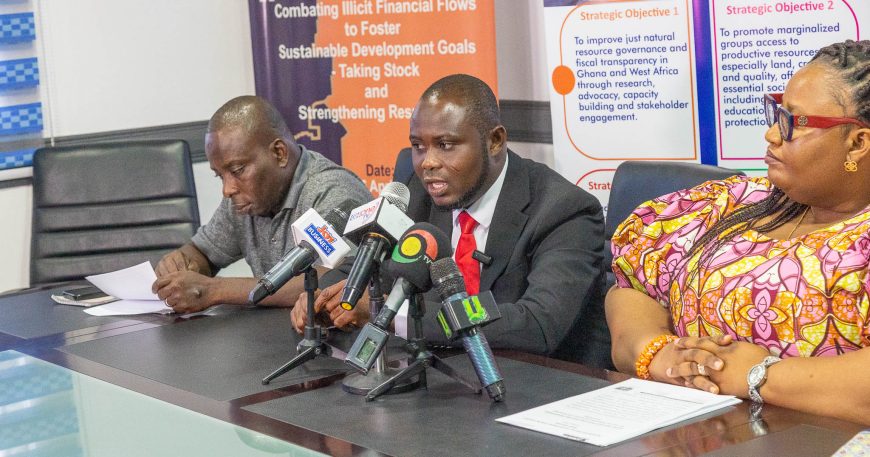
A Research Analyst at the Integrated Social Development Centre (ISODEC), Dr Adamu Abille, has argued that Ghana’s recent economic improvements should not be credited mainly to the International Monetary Fund (IMF) programme, insisting that domestic policy actions have played a bigger role in stabilising the economy.
His comments come after the Government of Ghana announced the successful conclusion of the country’s Extended Credit Facility programme with the IMF and its planned transition to a non-financing Policy Coordination Instrument (PCI).
Government has attributed recent macroeconomic gains, including lower inflation, exchange rate stability, improved debt sustainability and stronger reserves, to fiscal and structural reforms implemented after setbacks in the IMF programme at the end of 2024.
Officials say Ghana’s gross international reserves have risen to about 14.5 billion dollars, representing nearly six months of import cover, while sovereign credit ratings have also improved significantly.
Speaking on Channel One TV’s The Point of View on Monday, May 18, Dr Abille said ISODEC does not believe the IMF programme is what directly produced the current economic outcomes.
“ISODEC is of the view that the IMF programme is not the one that delivered the economic outcomes we are seeing,” he stated.
According to him, recent stability in the economy is largely linked to government efforts to mobilise internal resources, especially from the extractive sector and gold management, which have helped improve Ghana’s foreign exchange position.
He explained that because Ghana’s economy is heavily import-driven, increased forex availability naturally contributes to exchange rate stability and relative calm in the broader economy.
Dr Abille, however, stressed that such improvements do not amount to a deeper structural transformation of the economy.
He argued that Ghana still faces the challenge of import dependency and must focus on value addition, local production and creating value within the country rather than relying heavily on imports.
“So essentially our view is that it not necessarily the IMF programme that brought us here,” he added.

